Welcome to the Bradshaw-Holzapfel Lab

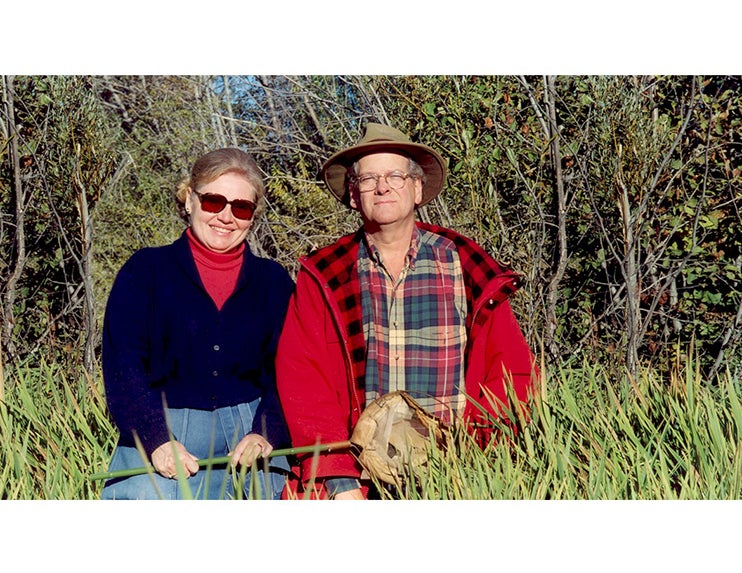
William E. Bradshaw
Ph.D., University of Michigan
Postdoc Harvard Universtiy
bradshaw@uoregon.edu
Christina M. Holzapfel
Ph.D., University of Michigan
Postdoc Harvard University
holz@uoregon.edu

People in the Lab

Research Training

Selected and recent topical
publications from our lab

Selected landmark Papers
from our Lab

Full Publication List

Center for Ecology and Evolutionary Biology
5289 University of Oregon
Eugene, OR 97403-5289

Laboratory:
305 Pacific Hall
Phone: (541) 346-4542
Fax: (541) 346-2364


"An Evolving Partnership" [pdf]

"Biotic Response to Recent Rapid Climate Change - NAS Sackler Colloquium" [video]

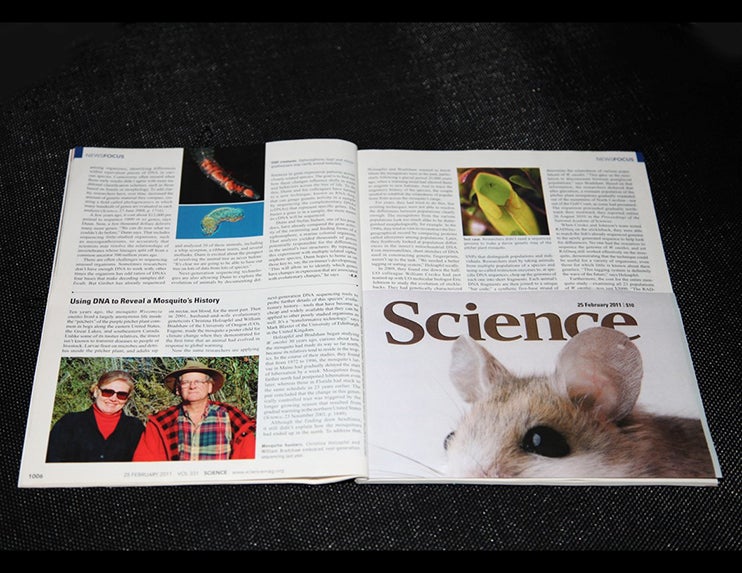
"In Mosquito, a small tale of climate change" - Boston Globe [video]

"DNA Files - The heat is on: evolution in action" [mp3]

"Oregon Humanities Center, UO Today" - Interview with Christina Holzapfel and William Bradshaw
on implications of genetic response to recent rapid climate change [video]


Synopsis of research


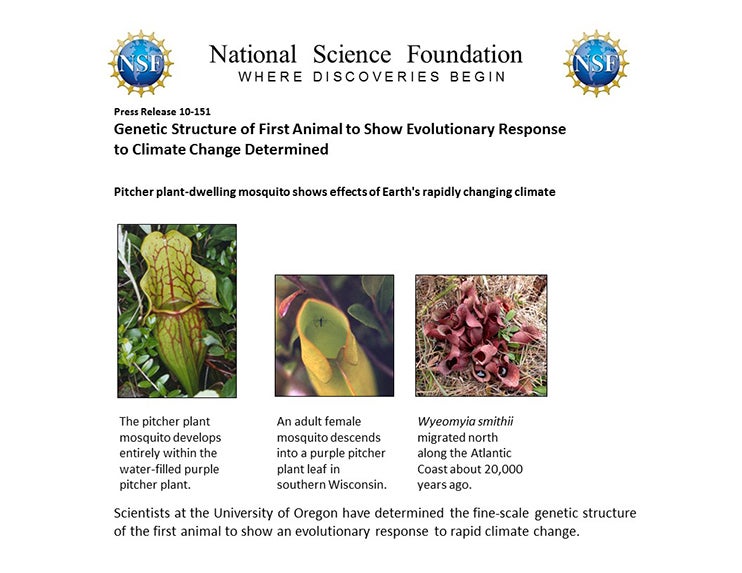
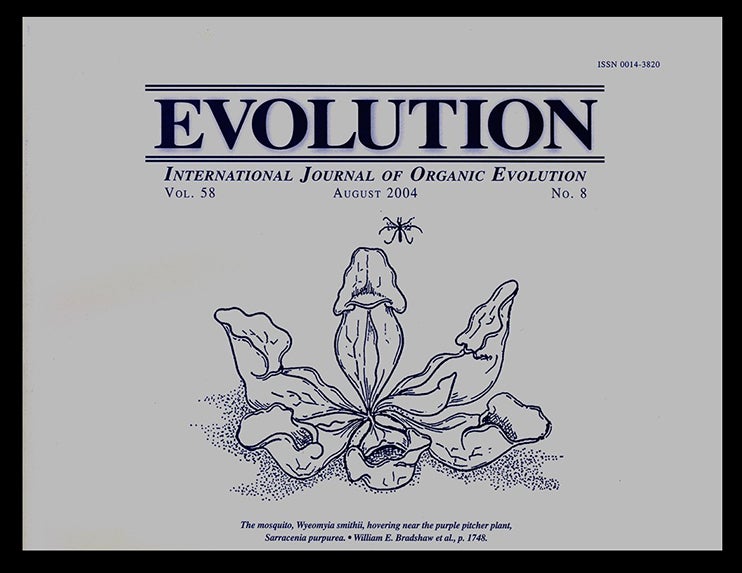
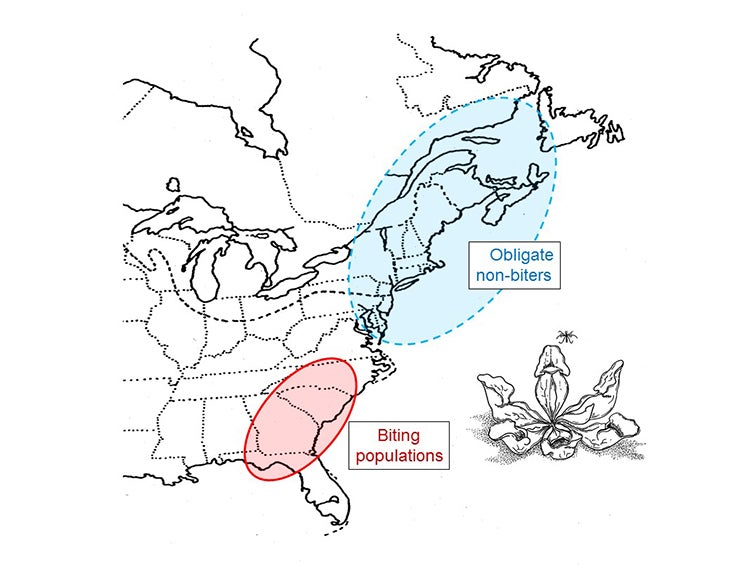
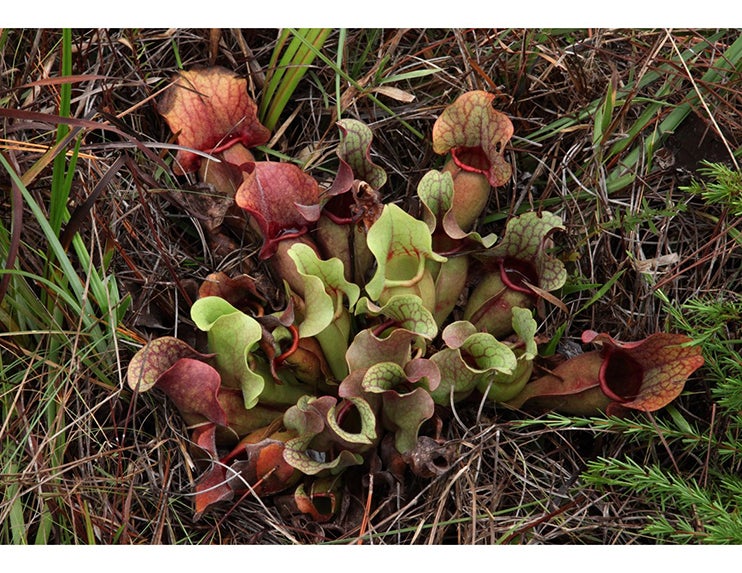
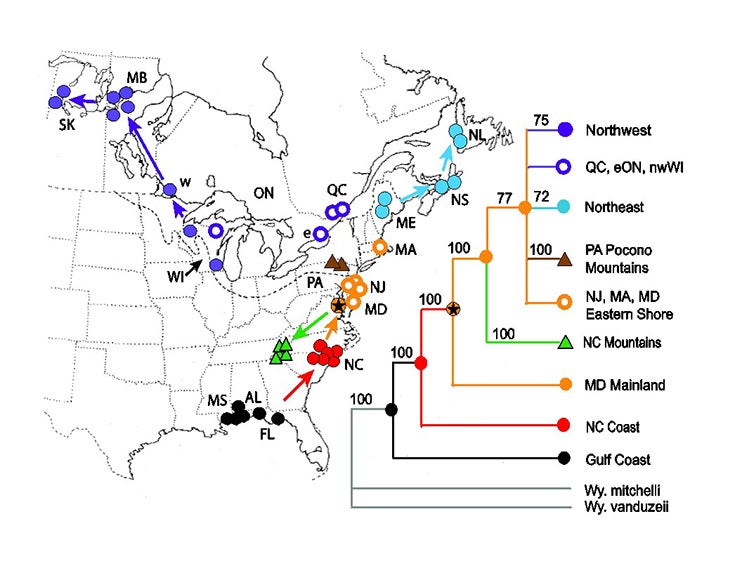
Our research involves the evolutionary genetics of geographical variation, seasonal development and biological timing. Our major interest lies in the pursuit of the general question of "how has the genetic differentiation of populations actually taken place in nature?" We focus on the genetic basis of physiological mechanisms because physiology lies at the level of integration between the environment and the gene and is important in regulating growth, development and reproduction as well as maintaining homeostasis in a changing world. Because the functional significance of physiological processes is often apparent, changes in these processes over ecological or evolutionary gradients in nature provide the opportunity to explore evolution of traits whose adaptive significance is known or reasonably inferred. We work with insects as our primary research organisms because they are ideal for answering basic questions in evolutionary biology and, at the same time, are of medical and economic importance. Due to the tractability in sampling and manipulation of natural populations, we have concentrated on insects developing in container habitats such as pitcher-plant leaves and tree holes. We are seeking to answer basic questions about genetics and evolution in several areas using the pitcher-plant mosquito, Wyeomyia smithii, in pre- and post-glacial populations from the Gulf of Mexico to northern Canada (30-58°N).


(1) What are the genetic bases of daily (circadian) and seasonal (photoperiodic) timing mechanisms and how do these mechanisms evolve in nature? The circadian clock is responsible for coordinating hundreds of daily metabolic events in all eukaryotes and even some Cyanobacteria. The simple act of anticipating the morning alarm clock is a testimonial to the immensity of circadian timing; however, few of us give pause to its importance unless we are forced to fly across time zones. Similarly, the seasonal photoperiodic timing mechanism that determines when temperate zone organisms develop, reproduce, migrate or enter dormancy is essential for the maintenance of fitness and to the persistence of species and communities as we know them. Yet, as of 2011, not a single gene from the photoperiodic timer has been identified in a natural population of any animal. Our lab is searching for these genes, with an eye towards identifying presumptive connections with the daily circadian clock, with an approach aimed at revealing evolutionary processes, and with an ever-present interest in applications of our results to real-world problems. Our publications over the years reflect the organizing theme of biological timing, be they questions directed at exposing the spectral sensitivity of animals to light, the role of epistasis in the evolution of complex traits, the role of temporal separation in predator-prey interactions, quantifying the effects of climate change on biotic systems, or investigating genetic variation over eco-climatic gradients. In all cases, we combine the power of our unique controlled-environment rooms, the power of identified populations over a wide range of latitude, longitude and altitude, and the power of new and developing molecular genetic and genomic approaches.


(2) What are the genetic mechanisms underlying the evolution of physiological cascades in animals that regulate the timing of seasonal activities in changing environments? We are using comparative gene expression and comparative QTL mapping to determine whether the same suites of genes have been responsible for the evolution of the photoperiodic timer over shorter (20,000-year) and longer (300,000-year) time scales and, consequently, whether evolution of this physiologically important trait takes place by the recruitment of new alleles to pre-existing loci or by the recruitment of new loci. The results of this research will also answer the questions: Does the perception of the genetic structure underlying the evolution of a physiological process depend upon (A) whether the genetic architecture is evaluated over shorter or longer evolutionary times and (B) whether gene expression is measured during the day or during the night? Because change in the seasonal timing of life-history events has been the major evolutionary response of animal populations to recent climate change, the genes that are identified as important in W. smithii’s ability to exploit the climatic gradient of North America also become candidate loci for the genetic basis of response to rapid climate change.


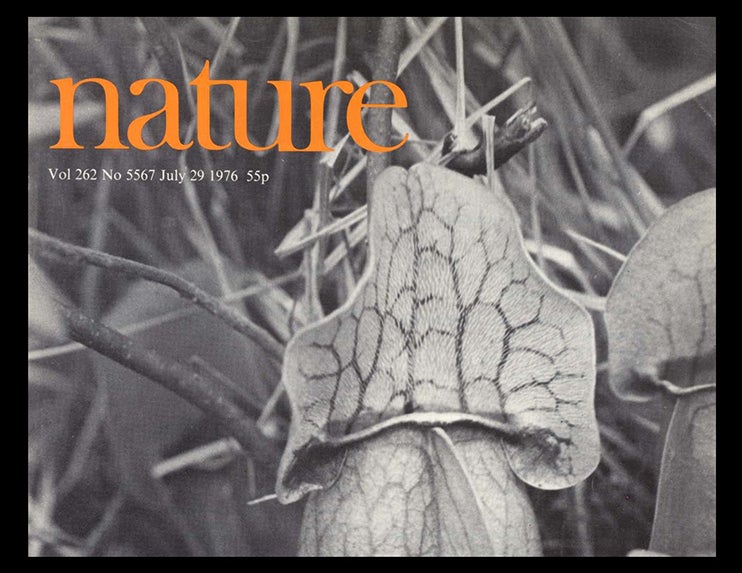
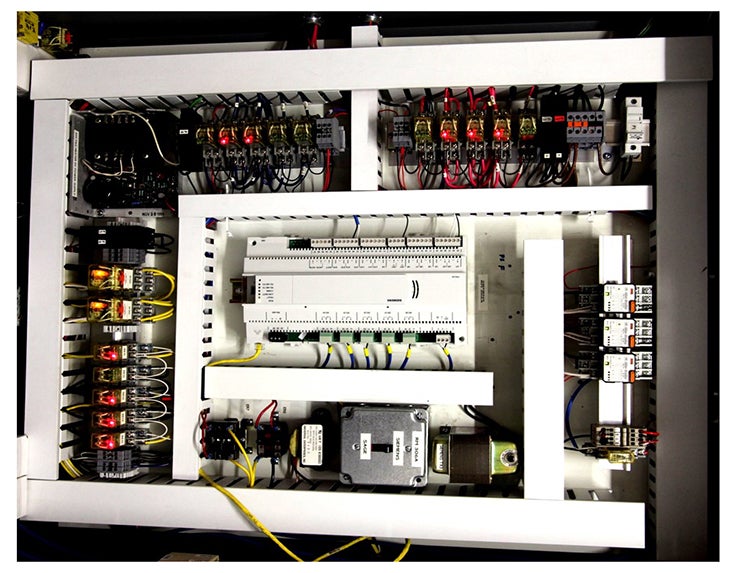
(3) What are the major adaptations that permit dispersal in the temperate zone and what is the genetic basis for the evolution of these adaptations? The study of adaptation often has meant a post-hoc rationalization for the "adaptive significance" of particular structures or physiological mechanisms. We are able to rear the mosquito, Wyeomyia smithii, entirely in its natural habitat, the pitcher-plant, Sarracenia purpurea, in elaborate controlled-environment rooms that can be programmed for any climate between the tropical and polar regions of Earth. Hence, we are then able to assess the actual contribution to fitness of a putative adaptation among populations, selected lines, or genetic manipulations in a seasonal context. These rooms also allow us effectively to perform reciprocal transplants between wide geographic areas without confounding photoperiod and latitude of origin.


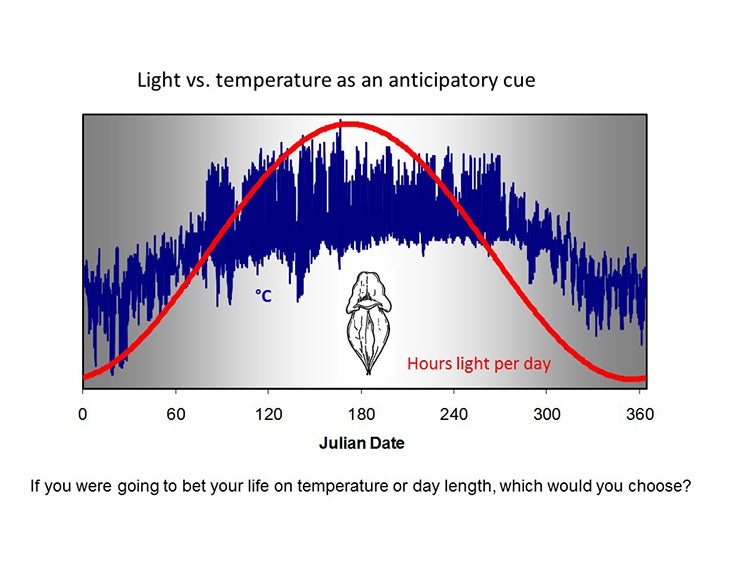
(4) The ability to cue seasonal development by assessing and responding to day length (photoperiodism) is widespread among temperate plants and animals. Photoperiodism represents the most fundamental adaptation to seasonal environments over geographic gradients. The mean day length used to switch from active development to dormancy in Wyeomyia smithii has evolved over 10 phenotypic standard deviations from Florida to Canada and has a heritability ranging from 25-70% within populations. We are therefore able to work with large evolved differences between natural populations and high genetic variation within populations. We employ population, quantitative and molecular genetic tools to several areas of current interest:


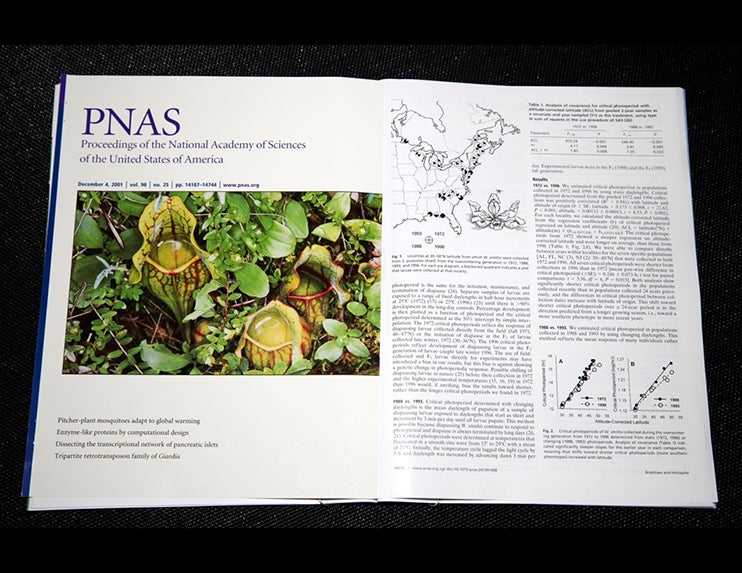
4a. During periods of rapid climate change, selection may not favor a direct response to higher temperatures or increased drought; rather, selection may favor physiological mechanisms that enable organisms to circumvent periods of stress through changes in seasonal timing of important life-history events. We are using Wyeomyia smithii to resolve the relative importance of seasonal and climatic adaptation through photoperiodic response as opposed to adaptive modification of thermal tolerance.


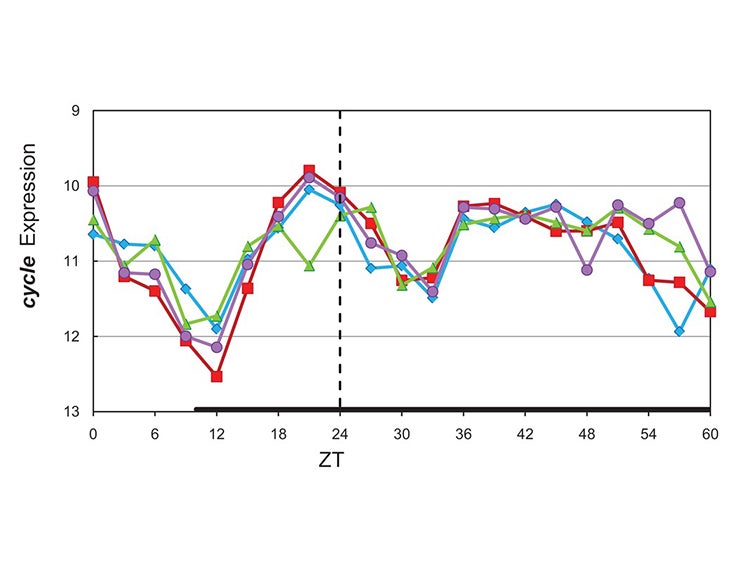
4b. We are using Wyeomyia smithii to ask whether the daily circadian clock constitutes the causal, necessary basis of the seasonal photoperiodic timer, modifies photoperiodic response, or represents a distinct physiological process. To answer this question, we are determining how properties of the circadian clock co-evolve with photoperiodic timing within and among populations at the physiological, population, and molecular genetic levels and are using forward genetic techniques to identify putative genes of interest.

We maintain an active laboratory of post-docs, graduate, and undergraduate researchers that is equipped with five controlled-environment rooms, multiple free-standing incubators, and eighty photoperiod chambers. We encourage students to ask questions and to combine experimental and theoretical approaches in both the lab and in the field. Our research has been supported by the National Institutes of Health, the National Science Foundation, the National Geographic Society, the John S. Guggenheim Foundation, and the Fulbright Commission. We are particularly interested in working with doctoral and post-doctoral researchers on the molecular and quantitative genetic aspects of evolution in the context of seasonal and climatic adaptation and the functional genomic basis of evolution over the eco-climatic gradient of North America.


 Selected and recent topical publications from our lab

Complete list of publications of the Bradshaw-Holzapfel lab