 |
|
 |
|
|
|
|
|
|
|
|
|
|
|
|
|
Ecoroof will delay water discharge to boiswales in case of heavy rain falling. |
|
|
|
|
|
|
|
On the night of Feb. 22 (30 minutes after midnight), Portland received 1" of rainfall during a massive one-hour storm (according to weather reports the next day). On Feb. 23, 12 hours later, we noticed the delayed runoff at the different roof surfaces at the EcoTrust building, while the downspouts that lead from the ecoroof were still channeling water, which indicated a delayed release.
We also observed the fact that there was no water still retained at the third floor roof.
Here is the method how we designed an experiment to measure the discharge volume after a rainstorm during Feb 22nd. to 23rd in the simplest but effective way. |
|
|
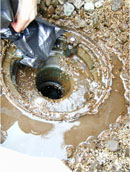
We first measured the amount of water that was flowing into the ecoroof drains on the east side of the building during a specific time period of 5 minutes. We did this by removing the outer cover of the roof drain and inserting a heavy-duty plastic garbage bag into the drainage pipe.
We did this first for the southeast roof drain, then the northeast one with a few minutes. Both of these drains connect to downspouts on the exterior front of the building, which are connected directly to the city stormwater system.
We then measured the runoff from the west side of the building, where water runs in to gutters whose downspouts lead directly to the bioswales with the use of Heavy-duty metallic tape to collect all water in a garbage bag for 1 hour each.
We took the four bags, including the paper towels but removing the tape, to the post office to measure the weight of the water. |
|
|
|
 |
|
|
|
|
|
|
|
|
|
|
|
|
|
|
|
|
|
|
|
|