|
Analysis
|
|
|
|
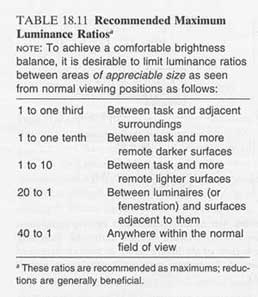
MEEB 18.11 provides recommendations for luminance ratios that outline what can be considered a comfortable brightness balance. It is better to limit luminance ratios between areas of "appreciable size as seen from normal viewing positions..." (MEEB, Table 18.11).
|
|
 |
|
|
| The primary focus of this case study is the brightness contrasts viewed from a work station looking towards the perimeter windows. According to the chart, an acceptable amount of contrast is expressed as a ratio of 20:1 - "Between luminaires (or fenestration) and surfaces adjacent to them". |
|
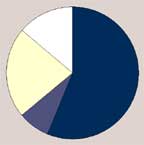
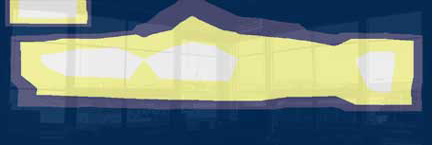
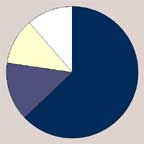
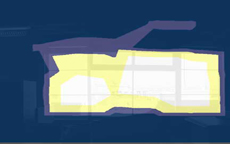
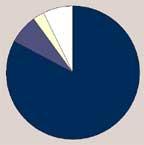
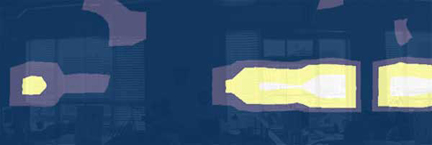
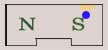
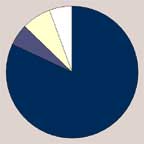
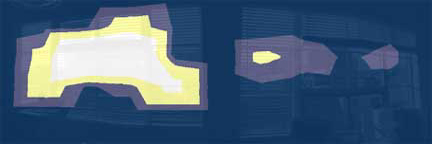
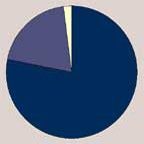
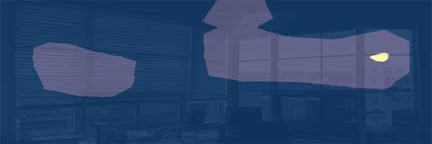
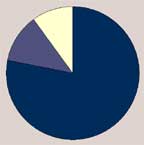
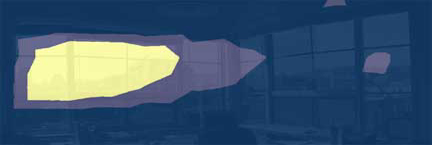
| These luminance ratio maps show the ratio between the measured luminance of surfaces adjacent to one another. Although related to the perceived brightness of the surface, these ratios show contrast and indicate whether potential for glare is present and where it may occur. Photographs below the maps reference the locations from which measurements were taken. The pie graphs to the left of each map show the amount of acceptable and unacceptable luminance ratios present over the same area. |
|
|
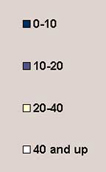
Since these ratios are comparing fenestration to adjacent walls, a luminance ratio of 20 (to 1) is the maximum recommended. Acceptable levels of contrast (ratios between 0 and 20) are indicated in shades of blue. Between 10 and 20 is acceptable, but might be perceived as uncomfortable by some. Above 40 is not recommended for anything in the visual field. Luminance ratios above those recommended (shown by light shades) indicate potential for glare.
|
|
 |
|
|
| North side |
|
|
|
 |
|
 |
|
|
|
 |
Northeast corner: Because this corner is somewhat dark, the contrast between light and dark is greater. |
|
|
 |
 |
|
|
|
 |
North window: Again, the dark surfaces around the window contrast significantly with the luminance of the glazing. |
|
|
| South side |
|
|
|
 |
 |
|
|
|
 |
|
Due east: Because the area is generally brighter, contrast between the bright areas on the windows and surrounding walls is reduced. |
|
|
 |
 |
|
|
 |
Due south: Although overall brightness reduces contrast (see east window above), the contrast between the extreme brightness of the left window and the adjacent walls is a potential glare problem. |
|
|
 |
 |
|
|
 |
Southwest corner (blinds as adjusted by occupants): Virtually no potential for glare is present. The blinds are deflecting direct sunlight and only allowing in a limited amount of indirect light, which is diffused throughout the area and does not tend to cause brightness contrast. |
|
|
 |
 |
|
|
|
Southwest corner (blinds up): Again, extreme brightness in a south-facing window creates a high brightness contrast and may cause glare. |
|
| It is clear from the data that our hypothesis is incorrect; there are potential problems of glare on both sides of the third floor with the majority of the problems concentrated on the north side. Because sunlight enters the south side, the overall brightness is greater and contrast is reduced. Sunlight is not able to enter the north side directly, so interior spaces remain dark and contrast between wall surfaces and fenestration is greater. |
|
|
|
|
|
|
|
|
|
|
|
|
|
|
|
|
|
|
|
|
|
|
|
|
|
|