Double Glazing
Hypothesis: The installation of double glazing will have a positive effect on thermal comfort.
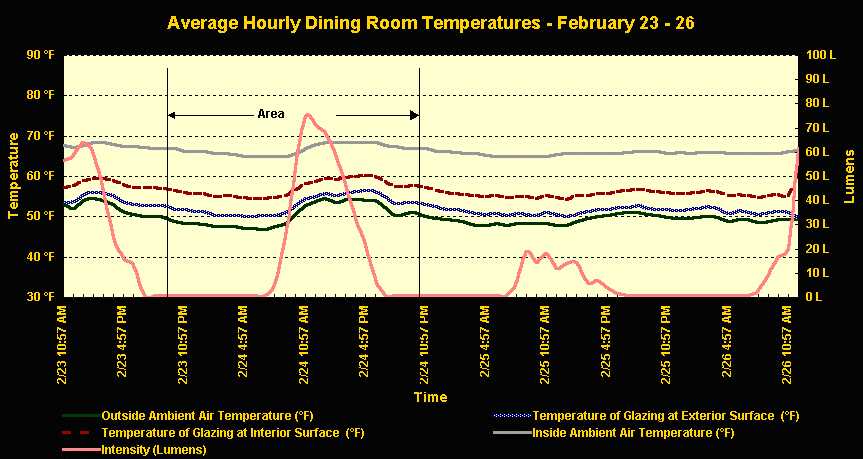
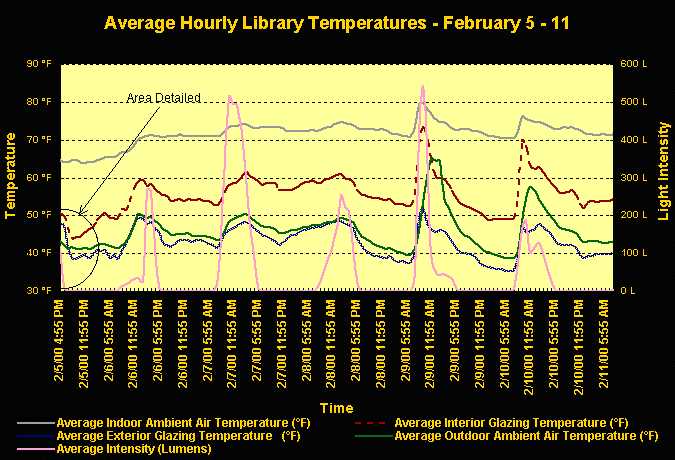
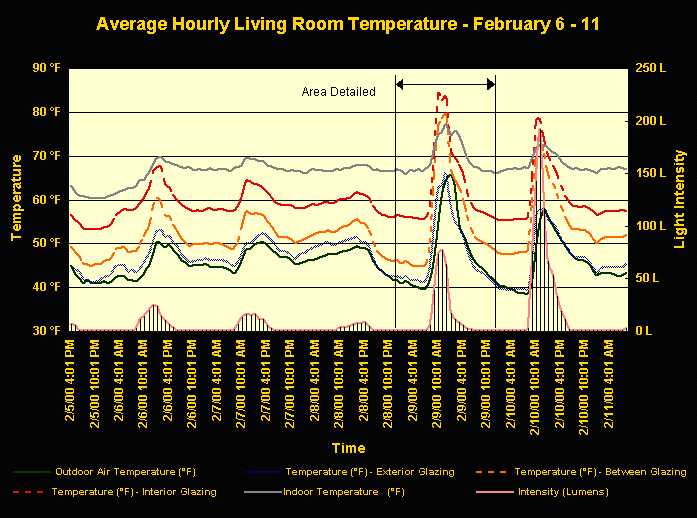
The graphs below show average hourly data for the dining room, library, and living room respectively. In each of the graphs there is an area which has been looked at in more detail, these graphs are on the next page and can be linked to through the links at the bottom of this page. In addition to the detailed look at shorter time periods, there are interior elevations of each of the rooms, which show the surface temperatures of the whole glazed area.
Analysis + Conclusions
It is clear from surface temperature data recorded for the dining room, library, and living room, that the glazing has the biggest impact on the thermal comfort relative to the other conditions we evaluated in our case study. The north facing dining room likely has the most conductive heat losses, and no heat gain from solar radiation. It can be seen from the data that there is little to no temperature difference between interior and exterior surfaces of the single pane of glazing. This is reinforced by the conditions in the library. The impact this has on the ambient room temperatures won't be known until the function of the HVAC system is fully resolved, though without any adjustments, there will still be large conductive heat losses through the windows.
The library, like the dining room, has only a single glazed set of windows, so there is a minimal temperature difference between the interior and exterior surface temperatures of that glazing. This is more difficult to tell in the data gathered, as the HOBO monitor fell off the window, and was recording surface temperatures of the grass rather than surface temperatures of the glass. While these words can be confused if spoken quickly, the data should not be. Other variables which make the library and the dining room different include: orientation - the library faces east; ratio of opaque to transparent exterior wall - the exterior wall of the dining room is all glass; and the function of the HVAC system.
The living room, in comparison to the other two rooms, has a double glazed wall of glass which wraps around all or part of three sides of the room. It also has a considerably higher ceiling and overall room volume (check numbers with other rooms for actual differences). To its benefit, nearly half of the south facing wall is entirely glazed. The temperature data recorded for the glazing in this room shows clearly that the double glazing system, even without being sealed or filled with low emissivity gas, functions much better than the other two rooms. The air space provides insulation which inhibits conductive heat losses, and the amount of glazing allows much more gain of solar radiation than either the dining room or the library.
