|
|
|
|
|
|
|
|
|
|
|
|
Double Glazing
Hypothesis: The installation of double glazing will have a positive effect on thermal comfort.
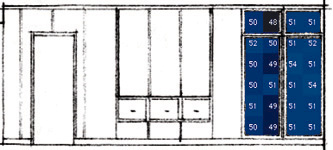
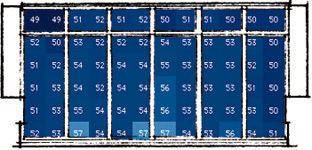
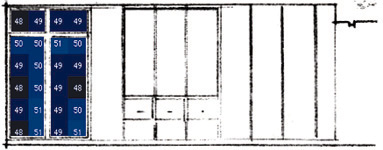
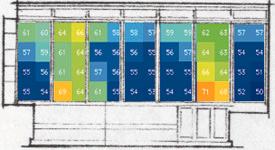
The graphs below show short term data for the dining room, library, and living room respectively. These are the detailed graphs, extracted from the long term data of the graphs on the previous page. The circled ore highlighted portions of each of the graphs show the areas of interest to look at more closely.
|
|
|
|
 |
|
|
|
 |
|
|
|
 |
|
|
|
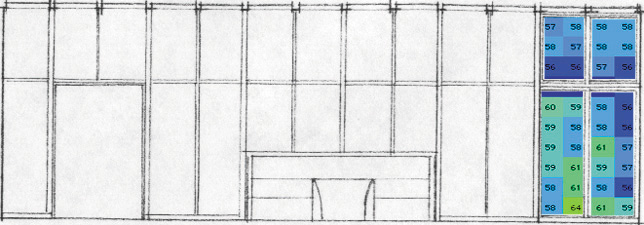
Dining Room - The surface temperatures recorded with the Raytek gun were pasted onto the north facing interior elevation of the room. They range from a low of 49 degrees (F), to a high of 57 degrees. The higher temperatures occur over the supply vents for the HVAC system, and show that little to no heated air is being blown into the rom. The top image is the west interior elevation, middle is the north interior elevation, and the bottom image is the east interior elevation. As a group they show the cold temperatures at the glazing. It should be noted that all of the exterior wall area is glazed. |
|
|
|
 |
|
|
|
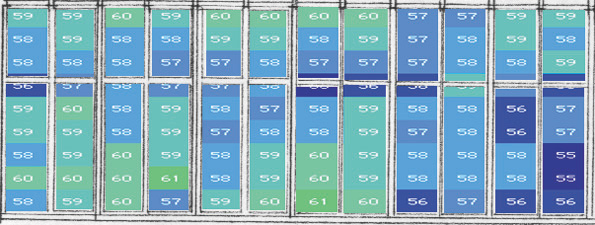
Library - Like the dining room diagram above, this image shows the surface temperatures of the glazing across the entire glazed area of the library. The built in sofa, desk, and bookshelves can be seen in the sketch. The function of the HVAC system is better in this room, as the higher temperatures on the two windows shows. Heated air is rising past the glazing and keeping the surfaces warmer than the rest of the windows in the room. Like the dining room, the library has little opaque wall area exposed to the outside other than the east end of the room. |
|
|
|
 |
|
|
 |
|
|
 |
|
|
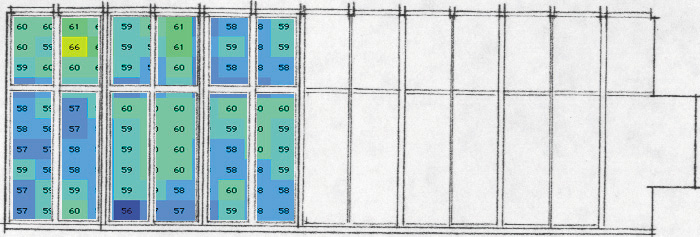
Living Room - The temperatures of the glazing in the living room are warmer than the dining room by an average of several degrees. The diagram above shows the higher surface temperatures of the glass on the east elevation. This temperature increases dramatically when there is direct solar radiation, which will not happen on the dining toom glazing during the winter months. The top image is the north interior elevation, middle is the east, and the lower image is the south facing interior elevation. |
|
|
|
|
 |