|
|
|
|
|
|
|
|
|
|
|
|
|
|
|
|
|
|
|
|
|
|
Crawlspaces
Hypothesis: The absence or presence of the crawlspaces doesn't affect thermal comfort.
|
|
|
|
|
|
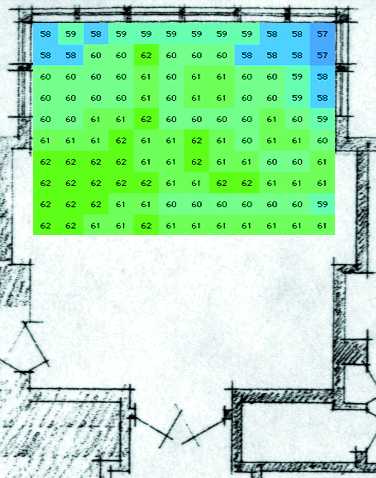 |
Dining Room - Surface temperatures of the floor and glazing. The graph is keyed by color, where each change in hue represents a one degree change in temperature (° F). Surface temperatures were recorded at 12" intervals across the floor and the glazing. The black line indicates the area below the floor where the foundation of the full basement ends and the unexcavated crawlspace begins. |
|
|
|
|
|
|
|
|
 |
|
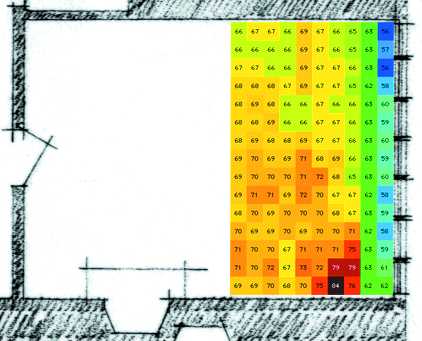
Library - Surface temperatures of the floor and glazing. Like the image above, the graph is keyed by color, and measurements were recorded at the same interval. The white areas in this image indicate opaque surface, which wasn't measured for temperature. Unlike the dining room and the living room, the floor of the library is entirely over a full basement. |
|
|
|
|
|
|
|
|
|
|
 |
|
|
|
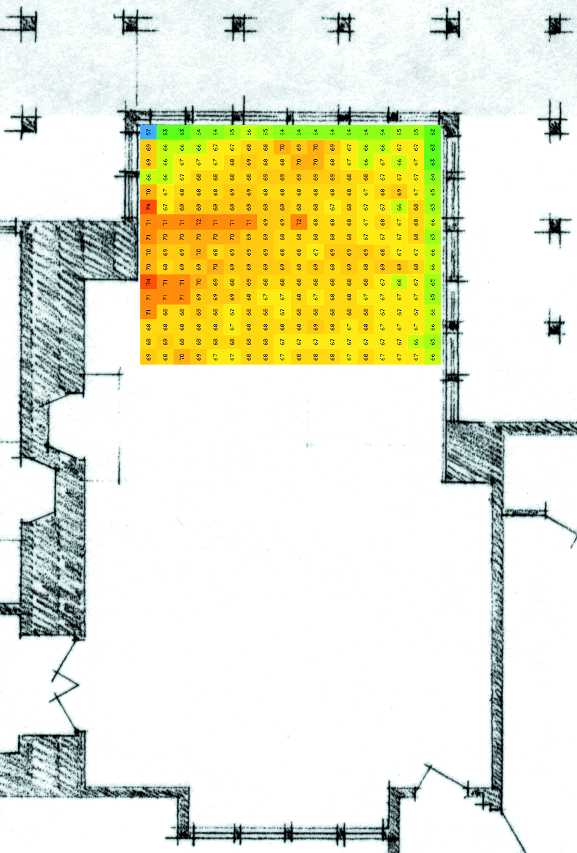
Living Room - Surface temperatures of the floor and glazing. Color changes indicate one degree changes in temperature, and the readings were taken at 12" intervals. Like the image of the dining room, the black line indicates the location of the crawlspace beneath the floor. |
|
|
|
|
Analysis + Conclusions
Based on the Raytek measurements of the floors and windows, we conclude that the surface temperatures of the floors is related to the radiant heat lost through the cold windows, not through crawl space. There is a direct correlation between cold spots on the floor and the window placement, while the crawl space, denoted by the thick black line in the living room and dining room, appears to have no connection to the surface temperatures. The higher surface temperatures of the library floor over the dining room and living room floors is due to the presence of windows on only one wall (as opposed to three sides for the other rooms) and the fact that the windows in the living room and dining room extend to the floor. |
|
|
|
|
|
|
 |
|
|