This page describes the Methodology we will use to gather data to support or refute our hypotheses. This methodology outline is our initial guess at the equipment, tasks, and locations which will be used, and will change according to the conditions for gathering data. Some conditions which might affect the methodology include available time, necessity of data, and amount and type of data gathered by other teams in the Vital Signs course.
We are gathering data to answer questions about two different hypotheses. Each of these hypotheses will aid in developing a further understanding of the thermal comfort of the house. As described in the previous pages, the hypotheses are addressing the effect of unexcavated crawl spaces, and unsealed double glazing on thermal comfort of the users of the Watzek House.
The Effects of Unsealed
|
 |
 |
|||||||
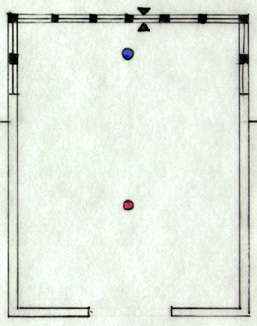
| A combination of 4-Channel and XT Temperature dataloggers will be used in this part of the case study to record the surface temperatures of the glazing for the different window conditions in the house. The 4-Channel dataloggers will record light intensity (lumens), temperature, and external temperature. These two temperature readings will record the ambient air temperature and the temperature at the thermistor respectively. These three settings will be used to determine the temperature and light conditions outside, in order to evaluate the effectiveness of the different glazing conditions as they have an impact on the thermal comfort of the house. We felt it was important to take measurements of the lumens in order to be able to correlate increased glazing temperatures with increases in solar radiation. It will also allow us to make similar correlations with interior globe temperature and MRT measurements. The HOBOs will be launched with an interval setting of approximately five minutes. This interval was chosen in order to avoid missing dramatic changes in conditions, as well as conserving HOBO memory which will allow us to run the tests for several days. By recording data over the course of several days, we can properly understand the affects of the temperature outside the house on the internal conditions. Like the study of the crawlspaces, we are studying the dining room, the library and the living room. The living room has unsealed double-glazing, while the library and the dining room both have single glazing. Both the living room and the library face east, therefore we will be able to compare (within a reasonable margin of error) the effectiveness of the two sets of windows to prevent conductive heat losses. Since the dining room glazinf faces primariy north, we will be able to compare the surface temperatures of the dining room to the library to see what impact orientation has on the temperature of the glazing. In the Library we will place one HOBO on the interior surface of the glass and one on the exterior surface of the glass. The same will be true of the dining room. In the living room we will place HOBO's on the interior and exterior surfaces of the interior and exterior panes of glass, a third datalogger will be placed between the panes of glass to measure the ambient air temperature of the airspace. The thermistors will be insulated from direct solar gain, so that we are truly taking the surface temperature of the glazing. The last temperature data we will record is the surface temperature of the glass over the whole area of glazing for each of the three rooms in our study. Surface temperatures of the glass will be taken with the Raytek gun. These temperature readings will be taken on a closely spaced grid (1'–0" squares), and will be used to compare the surface temperatures of the glazing to the surface temperatures of the floors. This will help us to graphically see the difference between the two surfaces in the rooms listed above. |
 |
||||||||
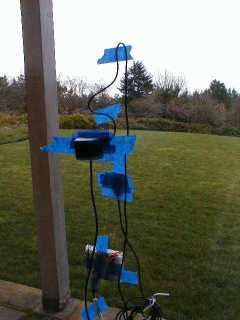
| Top: Robin installing the insulated thermistor on the interior surface of the glazing.
Above: HOBOs attached to living room windows. |
|||||||||
 |
|||||||||