

night2
night3
night4
The outside temperatures on the first night of data collection were significantly warmer than on any other night in the study, so we disregarded them. We noted, however, that the temperatures inside the car changed at the same rate as the temperatures outside the car, with only a one or two degree difference between them. Evidently, the standard car, unmodified, was no barrier to outside temperature conditions.
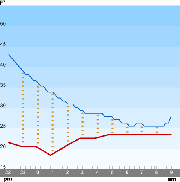
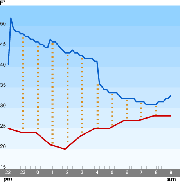
The outside temperatures on Nights 2, 3 and 4 were relatively similar and all below freezing, providing excellent experimental conditions. Notice in Figures 1, 2 and 3, below, that on each night of our experiment, the outside temperatures at 10:00 p.m. were around 25 degrees, dropping to the coldest part of the night between 1:00 and 2:00 a.m., and rising to around 28 degrees at 9:00 a.m.
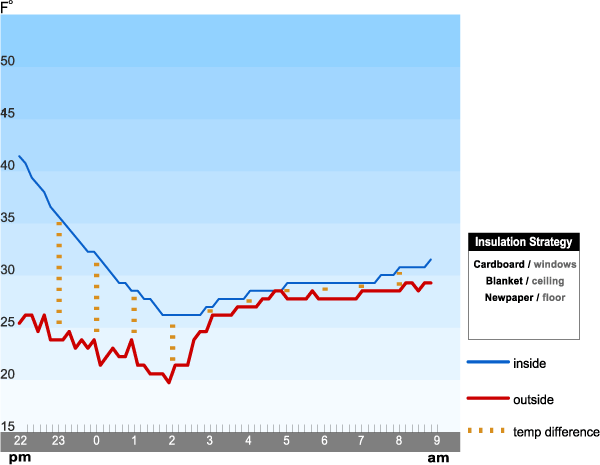
On Night 2, at 10:00 p.m., the temperature inside the car was 43 degrees, dropping at a rate of 4.5 degrees per hour to 26 degrees at 2:00 a.m., when the car appeared to have lost all of its initial heat. Notice in Figure 1 that both the car temperature and the outside temperature were lowest at the same time, so that there was only a 7 degree temperature difference between outside and inside the car when the outside temperature was 19 degrees. Note also, the car lost its heat relatively early, leaving 7 hours of sub-freezing temperatures before morning. From 2:00 until 5:00, both the inside temperature and the outside rose at the same rate, with the insulation barrier between the car and the outside maintaining a 2-3 degree advantage over the outside temperature.
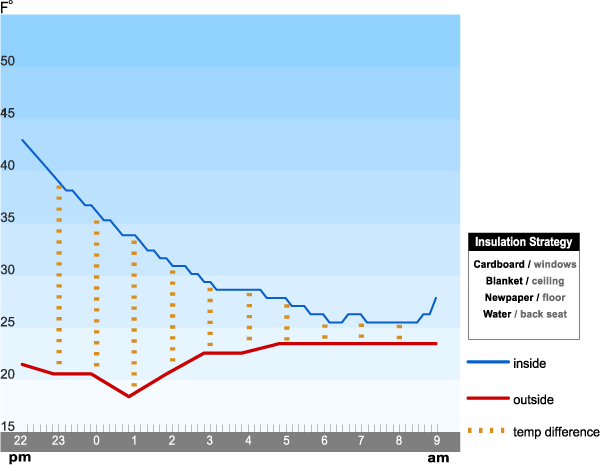
On Night 3, similar to Night 2, the inside temperature at 10:00 p.m. was 43 degrees. However, the car lost heat at a slower rate, 2.8 degrees per hour until 4:00 a.m. On Night 2, the car lost all of its initial heat by the coldest time of night, 2:00 a.m., while in comparison, on Night 3 the car maintained its initial heat until 7:00 a.m., just before sunrise. At the coldest time of night, the car temperature was 33 degrees, a temperature difference of 16 degrees from the outside. The car was unprotected for three hours of sub-freezing temperatures.
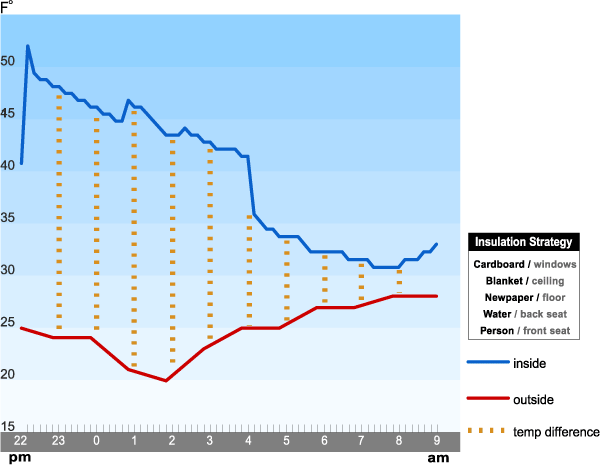
On Night 4 the car was 53 degrees at 10:00 p.m. From 10:00 p.m. until 2:00 a.m. the temperature inside the car dropped at a rate of only 2.5 degrees per hour, only ten degrees total! Because the rate of heat loss from 10:00 p.m. to 2:00 a.m. was so slow, the difference between the outside and inside temperature at the coldest time of night was 24 degrees! Note that the 7-degree temperature drop at 4:00 a.m. occurred when the experimenter opened the car window slightly to allow fresh air intake. The car resumed its 2.5 degree per hour loss and maintained its initial heat until 7:30 a.m. The experimenter noted that she was relatively comfortable although her feet were cold.