ATMOSPHERES OF THE TERRESTRIAL PLANETS
We now address the atmosphere of the Earth. We consider:
- the current
atmosphere of the Earth; and
- the evolution of the atmosphere of the
Earth.
After this, we consider the atmospheres of Venus and Mars (and
address the question of why the atmospheres of the three planets
are so different).
Atmosphere of the Earth
We first look at the current atmosphere of the Earth. Recall that the
current atmopshere of the Earth has a pressure of 1 bar which is ~ 100 times
larger than Mars and ~ 1 % that of Venus. The composisiton of the Earth's
atmosphere is 78 % Nitrogen molecules ad 21 % Oxygen
molecules with
trace amounts of of other things, in particular, water, carbon dioxide,
methane, and CFCs (more on these things later).
The pressure in the atmosphere declines as you move up in altitude
(Why?) and is conveniently divided into regions in terms
of how the temperature behaves,
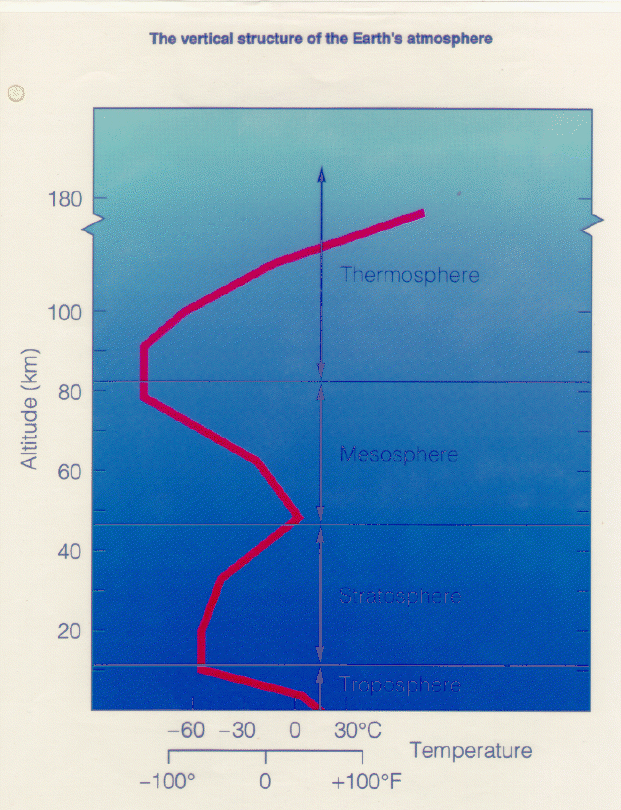
- Troposphere: The lowest layer of the atmosphere. The troposphere
contains most of the water and consequently, is the layer
in the atmosphere where most of the weather is generated. In this layer, the
temperature declines as you move up in altitude.
- Stratosphere: The next higher layer of the atmosphere is known as the
Stratosphere and is broken up into layers of different materials (i.e., it is
stratified from which follows its name). The stratosphere is the
layer where the Ozone lives. In the stratosphere, because the Ozone
abosrbs the solar ultraviolet radiation, the temperature increases as
you move up in altitude in the stratosphere.
- Mesosphere: Nothing of real interest goes on here. There are no real
strong absorbers of solar radiation and so the temperature decreases in
this layer as you move up in altitude.
- Thermosphere (or Ionosphere): In this layer, the solar radiation is
able to ionize
(strip electrons off of atoms) and thus the temperature again starts to
rise (since the atoms again absorb solar radiation). This is the layer
which traps radio signals and allows them to be heard around the
world (it is also the layer which gets disturbed and disrupts radio
communication).
All of the Terrestrial planets have atmospheres which show one or more
of these regions depending their make-ups.
Now let us return to the question of why the Earth's atmosphere is
warmer than suggested by simple equilibrium arguments. To understand
this point, we must consider the,
For more information on environmental issues see
Environmental Issues