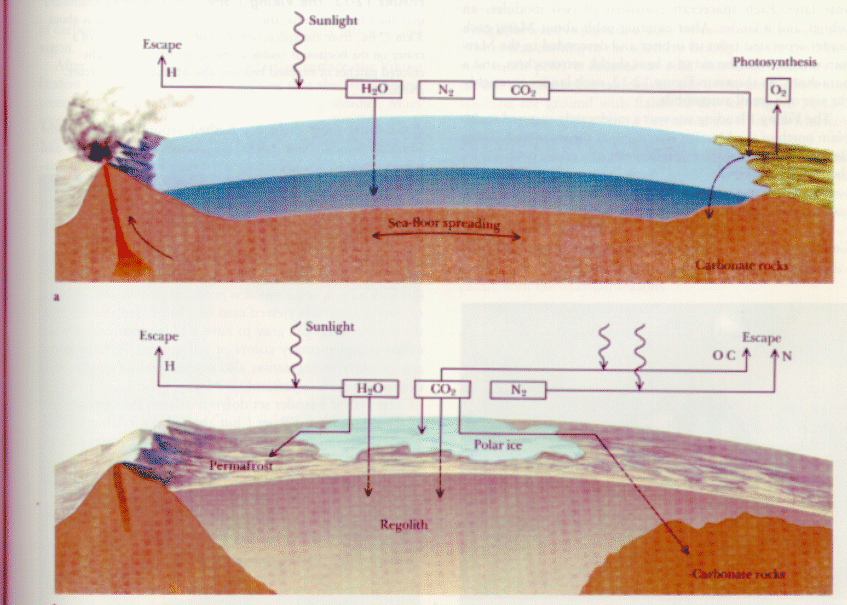
The Terrestrial planets (the atmosphere ones) are roughly the same sizes and same distances from the Sun and yet, they have grossly different kinds of atmospheres and conditions on their surfaces. Do we have any ideas as to what leads to the huge differences? Surprisingly, there may be simple explanations.
Venus, Earth, and Mars
In the beginning, we believe that the material which was outgassed from the interiors or carried in by comets onto the Terrestrial planets was similar. That is, the Terrestrial planets started out roughly the same. Originally dominated by carbon dioxide, water, carbon monoxide, ... (and perhaps methane and ammonia). On the Earth and Mars, we had,
The carbon dioxide was dissolved into the oceans, washed out of the atmosphere r by rain (and then washed into the oceans), or was directly absorded into the rocks and then washed into the oceans. In any event, the carbon dioxide was sucked out of the atmosphere and deposited into the oceans where it settled and formed sedimentary rocks===>the Earth's carbon dioxide is now trapped in the crust of the Earth!
On Venus, it is believed that it was too warm (because Venus is 30 % closer to the Sun than is the Earth) for there to be extensive liquid oceans. This meant that the carbon dioxide would remain in the atmosphere. Further, because water vapor is also a good Greenhouse gas, the early temperature of Venus may have reached 2,700 F and the surface pressure may have been 300 bars (or the pressure one would feel living at a depth of 3 km under the ocean). This is not fun.
The water vapor was then free to rise up into the high levels of Venus's atmosphere where it was broken up by solar radiation and the hydrogen from the water escaped to space. This caused Venus to lose its water. After the water was lost, the Greenhouse effect eased and the temperature dropped to ~ 900 F and the pressure dropped to 100 bars.
On Mars, a subtle thing occured. The process I talked about above only takes carbon dioxide out of the atmosphere. However, as we noted earlier, the Earth needs a mild Greenhouse effect to keep the temperature comfortable. What this means is that some carbon dioxide must be returned to the atmosphere so that we can settle into a nice equilibrium. On the Earth, this happens because of plate tectonics. The oceanic crustal material is subducted deep into the Earth where it is re-melted and cycled back into the mantle. However, some of the gases contained in the material are returned to the atmsophere via vulcanism. It is this return which keeps the Earth comfortable. On Mars because there is no large scale plate tectonics, the carbon dioxide was slowly taken from the atmosphere and never returned. This caused the oceans to freeze and much of the free water and whatever was left of the carbon dioxide to be dissociated and lost to space.
This process is quick in that it can occur in less than around 1 billion years.
MARS
An upshot of this scenario is that in the past Mars could have had a much thicker atmosphere and been much more earth-like (there are models which suggest that the early Mars had an atmospheric pressure of 2 bars!). This is interesting because today,
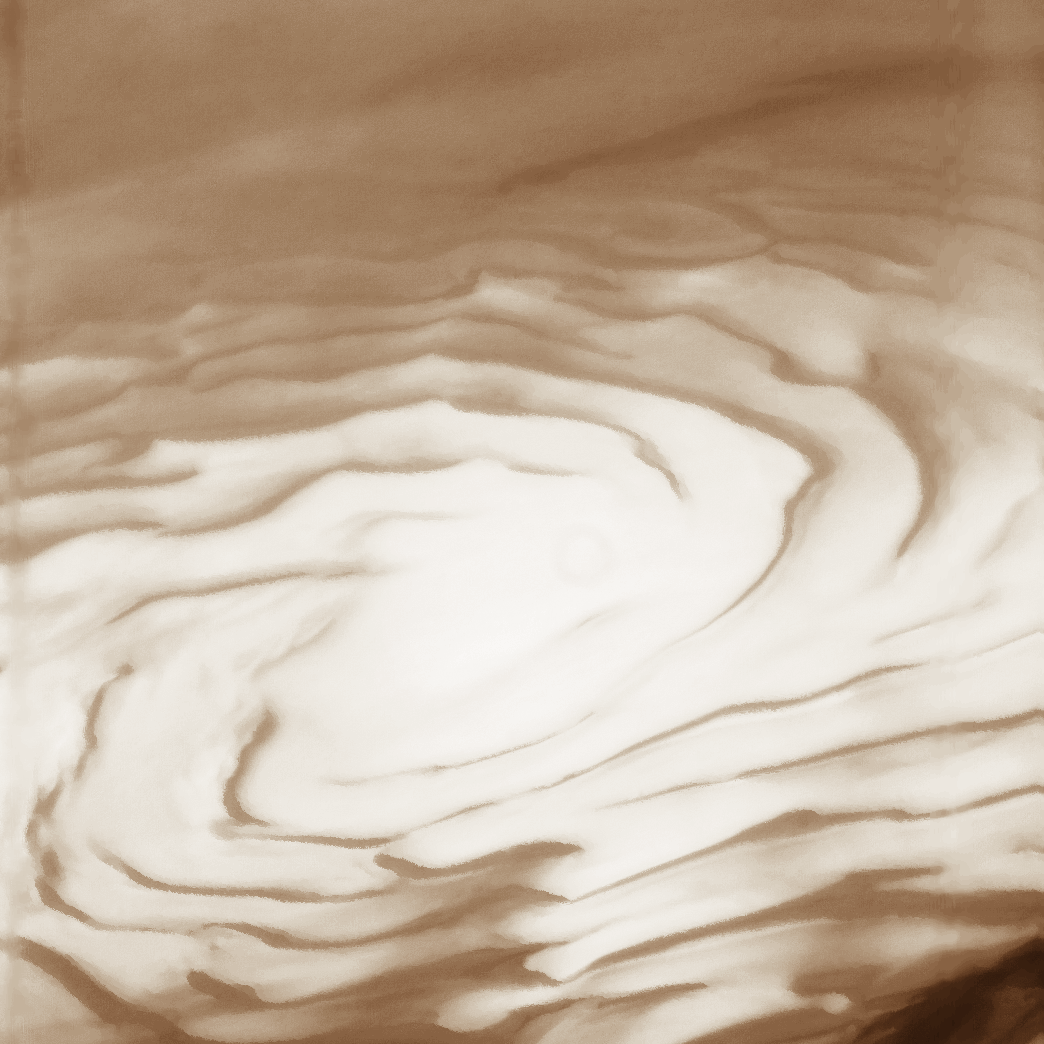
the atmospheric conditions on Mars are such that liquid water cannot exist on the surface of Mars. However, there is water there as we see a polar ice cap.
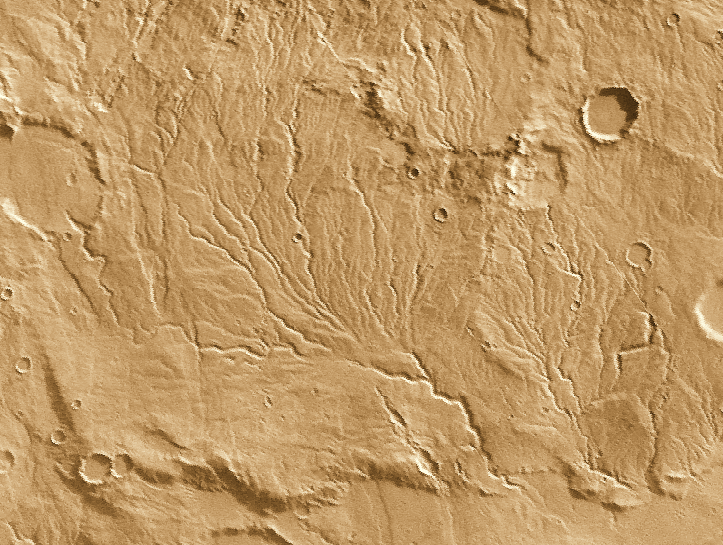
There is also evidence that in the past that water existed in liquid form on the surface of Mars ===> grossly different atmosphere in the past than today.
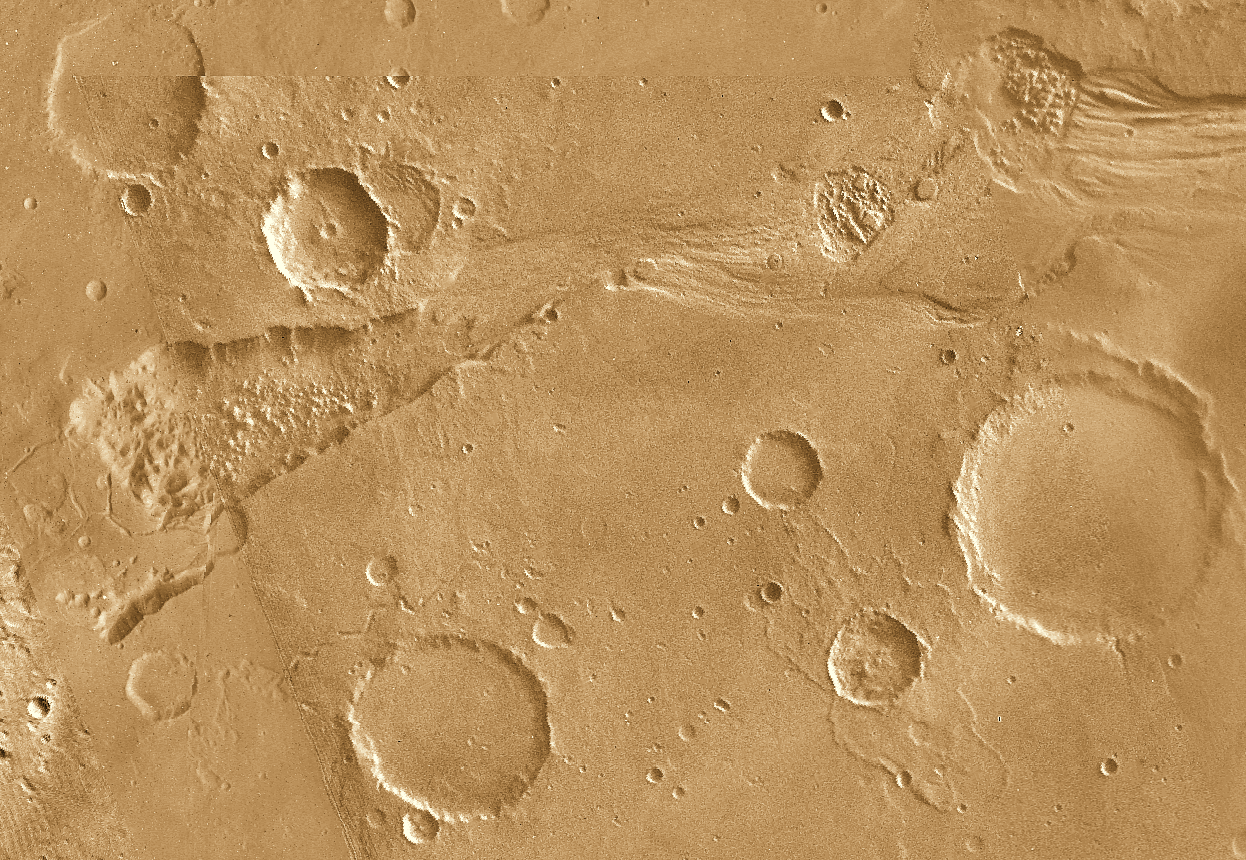
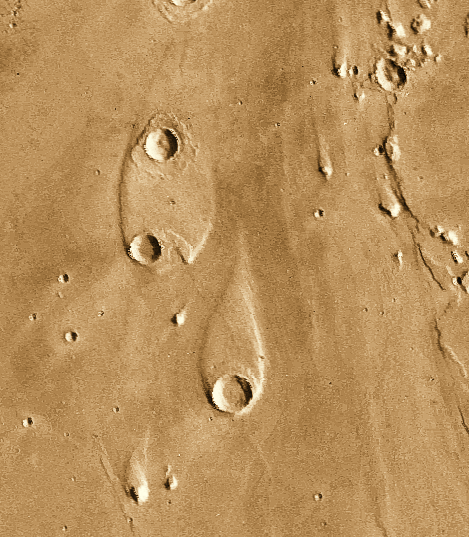
There, presumably is a permafrost layer on Mars even today as implied by. Outflow Channels and "Islands". These features were produced by massive floods on Mars. Presumably what happened was that some event caused a large-scale rapid melting of the permafrost layer which caused floods.