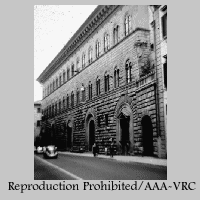
1. Italian Early Renaissance. Medici-Riccardi Palazzo, 1430, Florence. Exterior view. Note large-scale crowning cornice. Designed by architect Michelozzo di Bartolommeo.
1. Italian Early Renaissance. Medici-Riccardi Palazzo, 1430, Florence. Exterior view. Note large-scale crowning cornice. Designed by architect Michelozzo di Bartolommeo.
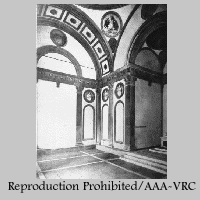
2. Italian Early Renaissance. Pazzi Chapel Interior, Florence. Located in the cloister of the Church of S. Croci. Begun in 1420 by Filippo Brunelleschi. Ceramic decoration in roundels by Lucca Della Robbia. Note dome on pendentives.
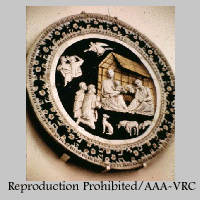
3. Italian Early Renaissance. Della Robbia plaque in roundel form about 3 feet in diameter.
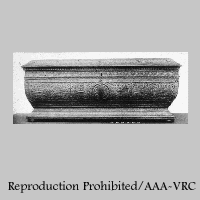
4. Italian Early Renaissance. Fifteenth Century Sienese Sarcophagus-shaped cassone on molded base. Pastiglia decoration, gilt.
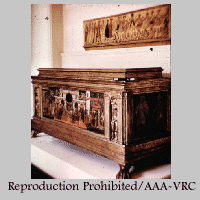
5. Italian Early Renaissance. Cassone of Tuscan type having large central painted panel on the front.
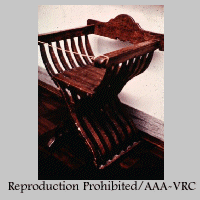
6. Italian Early Renaissance. Savonarola chair, 15th Century. Note the interlocking "X" form of this type of folding chair.
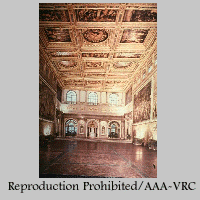
7. Italian High Renaissance. Palazzo Vecchio, Florence, Grand Chamber of the 16th Century. Note that ceiling murals are all contained within the field of the coffers as if they were each an individually framed painting.
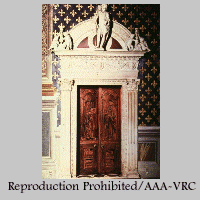
8. Italian High Renaissance. A sculptured doorway of the 16th Century within the Palazzo Vecchio, Florence. The Palazzo Vecchio was built in 1298 as a fortified city hall. Many interiors were remodeled in the 16th Century in the Renaissance style.
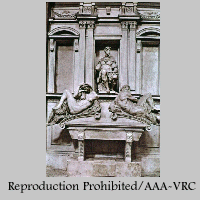
9. Italian High Renaissance. Interior view of Medici Chapel, 1520-1534 by Michelangelo. This serves as the new Sacristy of the Church of S. Lorenzo in Florence. Seen here is the Tomb of Guiliano d'Medici. Note the strong contrast of light and shadow made by the deep relief of the wall decoration, niches and sculpture in the round. This is a strong contrast to the much flatter treatment of the early Renaissance.
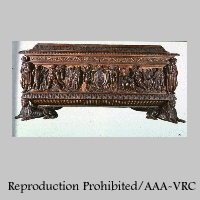
l0. Italian High Renaissance. Walnut cassone with high relief scenes of Hercules, partly gilt. Tuscan, 16th Century.
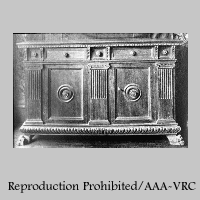
11. Italian High Renaissance. Sixteenth Century walnut credenza with gadrooned base, canted paw feet, fluted Ionic pilasters, and drawers and brackets in frieze.
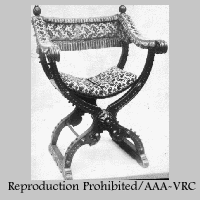
12. Italian High Renaissance. Sixteenth Century Dante folding chair, luxuriously detailed. Note that the Dante chair has only two "X"-shaped supports, while the Savonarola chair has many.