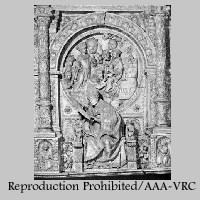
l. Spanish Renaissance. Tomb of "El Tostado," 1520-1524, by Vasco de la Zarza. Ambulatory of the Avila Cathedral. Note the plateresque style of decoration.
l. Spanish Renaissance. Tomb of "El Tostado," 1520-1524, by Vasco de la Zarza. Ambulatory of the Avila Cathedral. Note the plateresque style of decoration.
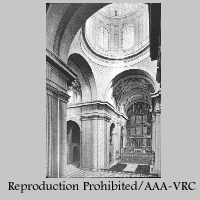
2. Spanish Renaissance. Interior of Church of the Escorial, 1563-1584. The Escorial was commenced by Juan de Battista for Phillip II; in 1567 Juan de Herrera was appointed architect.
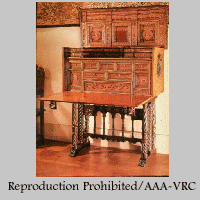
3. Spanish Renaissance. Walnut vargueno, 1550, with hinged top and fall front revealing two cupboards, each door having a head carved in profile in roundels (Romayne work) and drawers with openwork arabesque carving applied over red cloth. The stand upon which the vargueno rests is called a pie de puente.
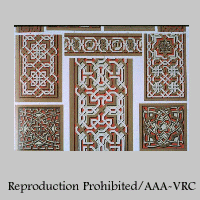
4. Spanish Renaissance. Laceria. In Islamic architecture decorative geometric patterns formed by the intersection of straight lines. Laceria in moldings is often seen in the Mudejar style, but persists throughout the Renaissance as a decorative treatment.
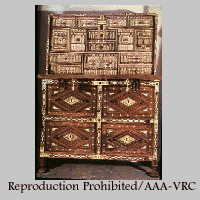
5. Spanish Renaissance. Vargueno on a taquillon, drop front open. The vargueno is a writing cabinet.
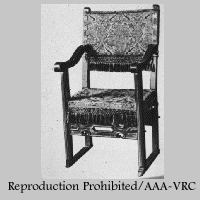
6. Spanish Renaissance. Late 16th-century chair of the type known as sillon de fraileros or monks chair, with a fretted front splat. The brocade hangings are attached by large ornamental nails.
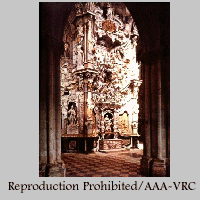
7. Spanish Baroque. The Transparente Altar by Narciso Tome'. Churrigueresque style. Toledo Cathedral. Note: the cathedral itself is in the Gothic style.
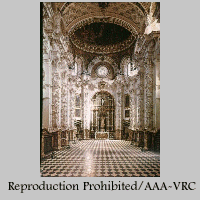
8. Spanish Baroque. Cartuja Sacristy, Granada. This is the Churrigueresque Sacristy of the Chapter House of a Carthusian Monastery at Granada. (1727-1764) Luis Arevelo, architect.
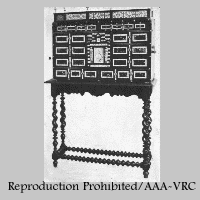
9. Spanish Baroque. A typical example of a mid 17th-century papeleira. This one is veneered in ebony, tortoiseshell and ivory. This is a writing cabinet, but unlike the vargueno it does not have a drop front that can form a writing surface, but the drawers are used for writing supplies, and letters.