|
|
SOLAR RADIATION
|
|
|
|
|
| Solar radiation had a significant effect on the temperature within the sunspace, particularly at the windows. |
|
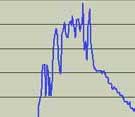
| Spikes (as shown on the right) were observed only on the temperature graphs for HOBO #s 2,3, and 5, which recorded temperatures at the middle of the window, top of the window, and outside respectively. Although the weather for these midday and afternoon hours was clear (as reported by The Weather Underground), we concluded that the sunshine at those times was intermittent. This evidence shows the dependence of the window temperature on the amount of sun it is receiving. |
|
|
 |
|
|
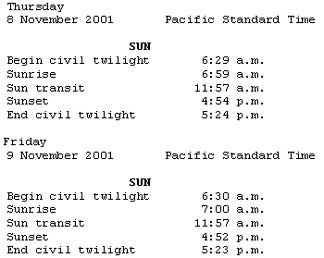
SUNRISE AND SET TIMES FOR NOVEMBER 8TH AND 9TH
|
|
|
|
|
|
 |
|
Information obtained from the US Naval Observatory web site.
|
|
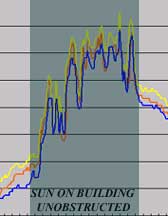
| Trees and other buildings around Gerlinger Hall block the sun in the early morning and late afternoon. Sunrise at this location is at 9AM, and sunset is at 3PM. Temperatures rose sharply after the building began receiving solar radiation and dropped once the sun sank below the trees. |
|
 |
|
|
|
|
|
|
GLAZING TO FLOOR AREA RATIO
Aglazing = 702 ft2
Afloor = 1,940 ft2
|
|
|
|
Aglazing
Afloor
|
|
|
|
|
|
|
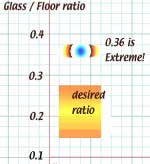
| = 0.36 |
|
|
|
 |
|
| According to MEEB, table 5.6, the recommended ratio of solar glazing to floor area for Salem, Oregon, is between 0.12 and 0.24, with the assumption that the building is insulated and windows are at least double-glazed. Even if the windows were upgraded to a high-performance type, the ratio of glazing to floor area would still exceed the recommended ratio. |
|
|
|
|
|
|
|
|
|
|
|
|
|
|
|
|
|
|
|
|
|
|
|
|
|
|
|
|