VITAL SIGNS CASE STUDY
TEMPERATURES IN THE SUNSPACE IN GERLINGER HALL
GROUP MEMBERS:
Summer Varde
summermv@yahoo.com
Janelle Black
jblack1@darkwing.uoregon.edu
Yanagisawa Yasuyuki
yyanagis@darkwing.uoregon.edu
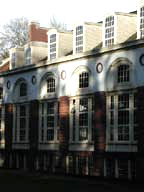
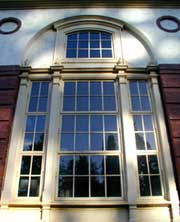
This case study looks at the temperature influxes within the South-facing hallway of Gerlinger Hall, which because of its large window area, acts as a grand sunspace. This sunspace is a popular place for students to study and relax, even while the temperature is out of comfort range.
There are currently no plans by the University to renovate Gerlinger, but through the results of our investigation, we have proposed several strategies that may improve the thermal qualities of the sunspace.
INTRODUCTION
HYPOTHESIS
METHODOLOGY